
Training Explained… Meant for clients this information gives a bit of background on training
Physical Activity vs Physical Exercise
TrainingPlan, Journal, and Review
Training Blocks
Training Session, Session Focus, and Intensity
Power Infrasture and Aerobic Infrastructure
Enhancement through Training Volume Stress and Recovery
Each training session has a purpose. In effect you are telling your body what you want it to be able to do. A lot of the training is based around holding good form while producing movement at a particular speed. If this is continuous without time to recover, performance will deteriorate, and injury will occur. If the right amount or recovery is allowed enhancement will occur.
If someone puts on more effort (intensity) during any time of a session, the time spent in that higher effort creates more stress on the body. In the same regard if a headwind develops on the same training course that you usually cover you have increased the training stress with that head wind by either riding a longer time for the same distance or with more effort for the same time.
The point is that total Training Stress, a calculation of Time Spent at particular Training Intensity should be considered. For a set amount of training time, Lower training intensity brings about a lower training stress then higher training intensity. It’s not one or the other, it is a formula of both. (This subject is being further developed)
Top
Holding Good Form
You may have noticed the common theme of holding good form in all categories of training listed above. It is important to hold good form in both training and performing to prevent injury, develop (and produce) the movement that is most efficient, and to develop (and use) the aerobic infrastructure for that movement. Baseline Sessions can help us find our starting point… a bit of measurement of form and fitness. For identifying if we are holding Good Form, we turn to simple observation/Video analysis:
- With Running, a treadmill (Laufband) is very useful…
- With Cycling, your bicycle on an indoor trainer (Rollentrainer, turbo trainer) can help.
- With running and cycling a video setup centered at hip level from the side, back, and front could be useful
- With swimming a video setup above and below water from the side and the front could be useful.
- In regard to camera setting a higher frames-per-second (fps) is important.
The measurement of Fitness will allow us to get a better understanding of Training Stress specific to you leading to better progression of training and lowering the chances of overtraining… In TRAININGPEAKS™ we use the Training Stress Score (TSS) (TRAININGPEAKS™ Article: Click Here). In the Baseline Sessions we are looking to measure your Threshold (a measurement you can hold for an extended period of time). Beyond the Baseline Sessions there will be occasions where training sessions (and performances) can be intense enough that it will give us a new threshold.
The Platform and Movement Patterns
The Core is the platform from where movements can work from. I describe the core as the body from hips to shoulders. This platform could also be looked at as a springboard… that must be suspended in good shape with the right kind of muscle tension. In simple terms the base for this platform starts with square shoulders, square hips, and a neutral pelvic tilt.
Movement patterns are basically coordinated series of movements around joints and involve many muscle actions of tugging, stabilizing, and slowing down… Running is suddenly a very complex activity. The same goes for Swimming and Cycling… The joints of the body are set up to want to move a certain way and muscles are attached in a way to create efficient movements… That does not automatically mean everyone is efficient in a movement. Bodies adapt to what is placed on them… including sitting at a desk 40 to 60 hours a week (add in your form of commuting… sitting). Some muscles tighten and others weaken. Then when it comes to running (or another movement pattern) the body wants to stay in line with what it is used to… sitting.
Overuse injuries can occur when you are telling the body one thing (running) and the body wants to do another (sitting). At the same time more energy is needed for the individual running the same distance with an inefficient movement pattern.
For a body that is more used to sitting then movement, developing stability/flexibility/power in a particular movement pattern (Swimming/Cycling/Running) is difficult… drills and stability/power exercises (Strength exercises) that work on the individuals can help. I would be cautious with fitness machines that guide you in the particular movement pattern it wants you to. A good aerobic system must be developed alongside the development of the movement patterns to bring everything together… the endurance athlete produces one power movement over and over again.
Force production creates the movement, The Aerobic infrastructure allows you to do this continuous
Force production creates the movement, The Aerobic infrastructure allows you to do this continuous. When the skill in performing the movement patterns improve, efficiency improves and likelihood for injury decreases. This involves the combined effort of muscles stabilizing and moving through a joint. Flexibility, Stability, Power, Endurance.
Swimming form, Cycling form, and Running form come with their own unique challenges to develop.
Swimming Form… we are moving our body through water; the body gets minimal feedback to interpret as we are passing through. With training we would like to minimize the resistance of our bodies against the flow of water, at the same time we try to develop the production of force against the water to allow us to pull and push our bodies through the water.
Cycling Form… earlier I cautioned about using fitness machines as it guides you in a particular movement pattern. In a way the bicycle does the same thing. The trick is to set up the bike to work with your biomechanics. The points of contact are your feet with the pedals, sit bones with the saddle, and hands/arms with the handlebars/arm rests. The saddle and handlebars/arm rests should be set up in a manner to allow for body shift as you are moving through a variety of terrain and conditions. With training we would like to minimize the resistance of our bodies (with our bicycle set up) against the flow of air, at the same time we try to develop the production of force against the pedals to allow us to move across the terrain and conditions.
Running Form… in a similar manner to cycling, the body should be able to shift (in running form) given the terrain and conditions. An individual can use multiple running forms throughout an event. I more recently started adapting my run… Would consider the following: absorb landing with quadriceps, pull body forward with glutes, and allow legs to swing forward.
Activating the right muscles
The sessions above describe exercises that are somewhat continuous in nature. There is another focus that is very important in training… Supportive exercises called Activation Sessions help activate the muscles needed during the session and performance.
- Strong muscle attachments to the bone
- Bone density
- Muscle density
- Movement
- Coordination of muscle contraction
- acceleration, deceleration, and stabilization
- Aerobic Infrastructure
Top
Swimming, a closer look
Swimming form is a difficult one to develop because there is so little feedback given when doing the activity. “Dry land training” is a very useful tool to develop good form. Of the five exercises above, three of them really cross into dry-land training for swimming (The Plank/Side-Plank, Up-Kick and Pull, and Catch Pull Push)
Lat Pull (Focus Point)
We want to use the power of the lats in the identical manor of doing a Lat Pulldown to bring your body forward.
Instead of Pulling a bar, the resistance in the front crawl is the capture of water molecules
Dry Thighs Kick (Focus Point)
Beside fixing proper breathing technique, one of my go to solutions is asking for Dry Thighs… One of the struggles I find is legs dropping… putting a lot of drag… resistance on the swim. This drill/skill works on this. Clients should chat with me before attempting this.
It can be done with/without a kickboard or in freestyle (front crawl) swimming. I find that many individuals bend their knee too much, cycle kick, kick too far down, or simply have body below hips drop down (Chest/head up).
- Use glutes to raise thighs to water surface
- Allow gravity (weight of legs) to drop the legs slightly down
- Use glutes to raise thighs to water surface again
I am looking for legs and ankles to stay relaxed… focus on glutes
- No forced knee bend from muscle action (hamstrings)… focus on glutes
- Knee will bend as shin meets resistance of water with gravity pulling leg down
- No forced straight legs from muscle action (quads)… focus on glutes
- Knee will straighten as leg meets resistance of water as thighs rise to water surface
- No forced ankle bend from muscle action… focus on glutes
- Ankle will bend as foot meets resistance of water as thighs rise to water surface
- No forced pointed ankle (toes)… focus on glutes
- Ankle (toes) will point as foot meets resistance of water with gravity pulling leg down
Now this is a skill/drill that should allow my clients to get a better body position with a Focused movement … over time the kicking should naturally evolve with improved overall swimming form. The focus here is to get control of leg movement and higher leg position. It is not the answer for all my clients. Again, clients should chat with me before attempting this skill/drill.
a note about Open Water swimming
It would be good idea to check the conditions before heading out…
- Ahead of the session day I check the forecast
- The morning of the session I check the Beach Conditions
- As the time approaches, I check the live web cam.
Typically I personally would not attempt to swim in conditions with winds coming in at 10mph plus… unless it is coming from the west.
I live on the east coast of Florida, and if the winds come from anything but the West there will be a swell, chop, or waves.
If the wind is coming in from the West the water is usually very calm.
Top
Running, a closer look
I have now seen many forms of running and seen great performances from the variety. What I do like to consider is how the running form can do in the sense of performance, Prevention of Injury, and Prevention of Cramping during the session.
An individual can use multiple running forms throughout an event. I more recently started adapting my run… Would consider the following:
- absorb landing with quadriceps
- pull body forward with glutes
- allow legs to swing forward (with low exertion)
Of the five functional training exercises above, three of them really cross into training for Running (The Plank/Side-Plank, Glute Bridge, and Single Leg Stand up/Kneel)
Sessions on the running… Depending on your training needs, goals, and current focus you may find the following sessions:
- Aerobic Build (Threshold)
- Steady (Form Endurance)
- Recovery (Active Recovery)
I am not a fan of work on High Force Production in running as I believe it could lead to a high likelihood of injury… I prefer to use the cross training of cycling in this effort.
Top
Cycling, a closer look
Cycling form starts with a good-for-your-current-you bike fit (molding the bicycle to you)… See Equipment Guide for Fitting info.
Now that the bicycle is molded to your body training can begin. Of the five functional training exercises above, three of them really cross into off-bike training for Cycling (The Plank/Side-Plank, Glute Bridge, and Single Leg Stand up/Kneel)
Sessions on the bike… Depending on your training needs, goals, and current focus you may find the following sessions:
- Aerobic Build (Threshold)
- Leg Work (Force)
- Steady (Form Endurance)
- Recovery (Active Recovery)
Molding the bike to you, a closer look
Cycling form starts with a good-for-your-current-you bike fit (molding the bicycle to you)
Going Faster. There are a lot of forces that fight against this. It’s a drag… on the ground and in the air. To go faster we have to break through this. The more drag we encounter the more force we have to produce to keep the speed. Both the bicycle and the individual have an effect on this. Getting the right bicycle is one part. After consideration of how long the ride is (short and sweet or going the distance), what format the ride takes (Draft/non-Draft; road/off-road; climbs/flat), and understanding one’s fitness level (flexibility, power, endurance)…bicycle build (components) and fitting (molding the bicycle to you) sets an individual up in the right direction. We would like to assist individuals in this with the consideration of where they are now and where they want to be.
The second part is the training and working with what you have, training that will help with reducing drag and improving force. Training is so individual that it can take on many different focus points (individuals may or may not have to work on Healthier body composition to reduce rolling resistance; Flexibility to keep the power while reducing air drag; Power to cut through these forces; Endurance…). Or cycling can just be fun. Enjoy the ride. Stay safe.
The bicycle fitting should be considered part of your training… it is like a flexibility, stability, endurance, strength… test after creating the ideal fit for your body mechanics we use this as a baseline measurement to develop training goals of stability, flexibility, strength with understanding that the body adapts to training…
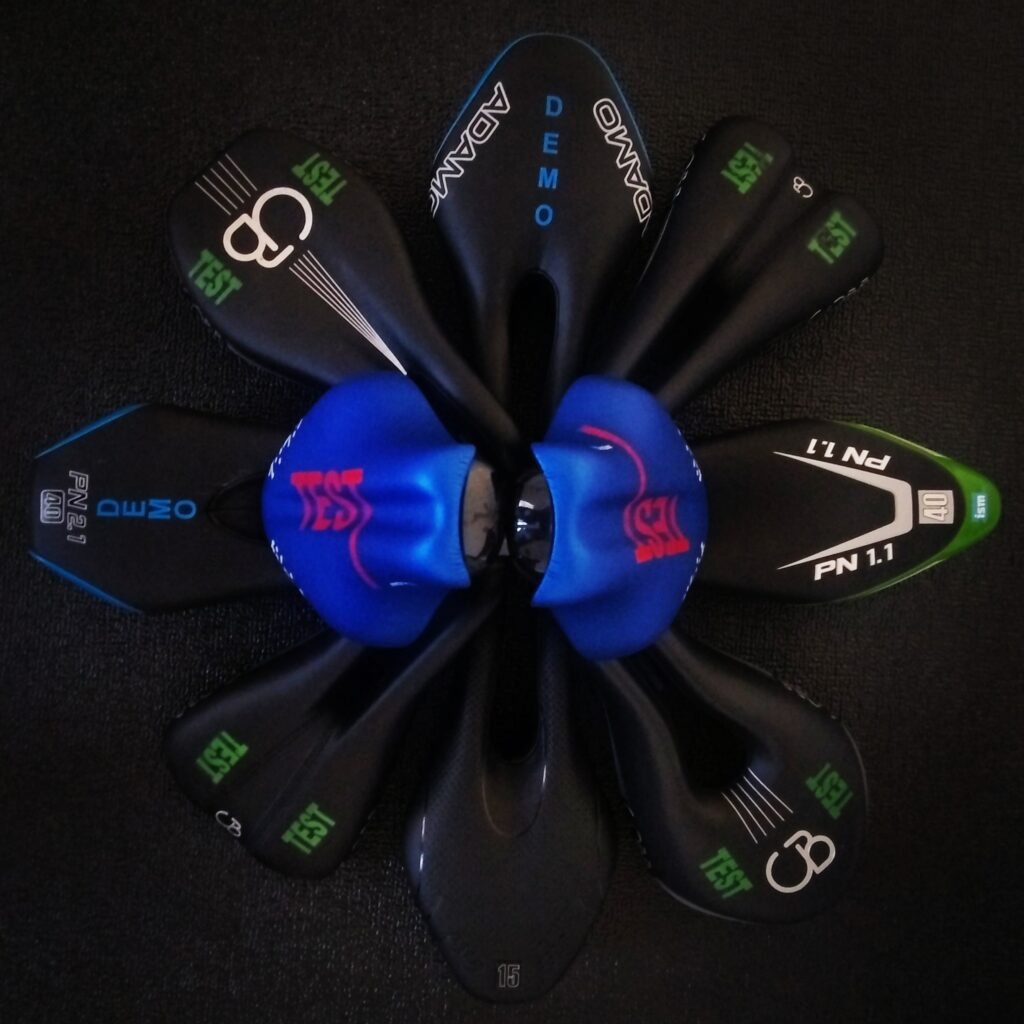
Take a seat
Have a seat on your sit bones… when I talk about your sit bones it is pretty much the bony parts (two points next to each other) you sit on when you are on the saddle… and with the pelvic tilt the width between the two points may change.
So, depending on your primary position on your bike you may decide on a different saddle (width of the padding on the saddle).
We want to remain stable on both of these two points, not pivoting back and forth on them, nor simply staying on one side.
Given this you should try out different saddles in succession… finding your saddle for when you are sitting upright or deep into your aerobars.
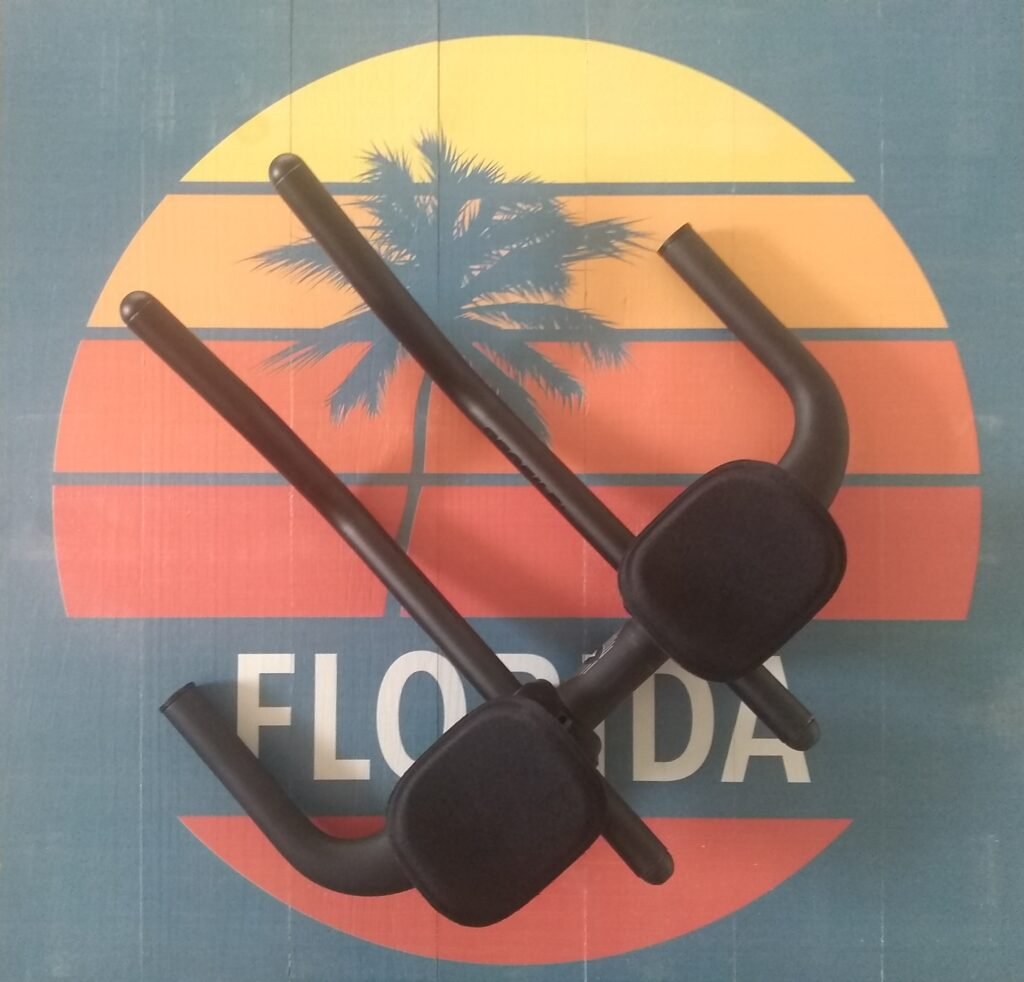
Dial in your Cockpit
With everyone having a unique structure, your equipment should resemble your needs.
Your cockpit should be dialed in for this… to help with this there is a variety of extension shapes and lengths, plus armrest shapes… From there, fore/aft/width adjustment on the armrests plus risers/angled wedges for perfection.
And if you use a drop bar… there are bars for your shoulder width and hand size.
Find your Stance
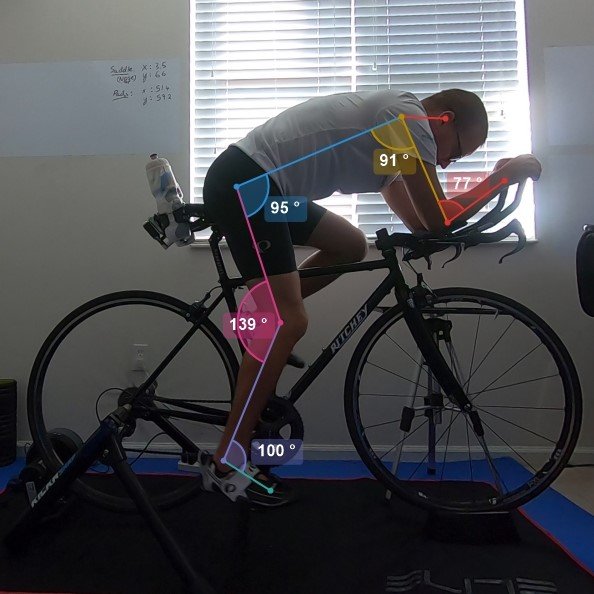
Hips over knees over toes… keeping everything in line.
In cycling pushing the pedal reminds me of the Single Leg Press, but the position of your foot is locked in with your pedal.
Similar to adjusting the rest of the bike to your body, the pedals should be shifted according to your needs.
Top
Below I will describe some of the activity included in Training
Activation, a closer look
Dynamic Stretching
I use dynamic stretching to help make the session better… improve performance, practice good movement, and prevent injury
Activation Session
It is very difficult for individuals to hold good form during actual movement. The exercises in this session is used to get particular muscles used in a particular movement pattern. From the above list of Training types… this would be in Functional
Top
Environmental Responsibility
By definition we are part of our environment. We should act like it.
Equipment
As outdoor enthusiasts we do love our natural world. There is beauty in the presence of the natural environment. Equipment/Kit has helped us explore and enjoy our natural world. We love our natural environment, but how environmentally friendly is our lifestyle.
When you are buying your equipment think of the environmental impact:
- What are the logistics of what it takes to get your item from production to you?
- What does it take to maintain your product and how long is the lifetime of that item?
- What is the Afterlife of the product like?
- Does the item you are buying have to be thrown away within 3 years?
Purchasing something at a cheaper price does not mean always that you are getting it at good value. If you must throw away and buy a new jacket every year it is neither good for your pocket nor the environment.
If you can also find ways to maintain your equipment and clothes so that it will last longer the better it is for your pocket and the environment. For instance, a lot of waterproof clothes can be retreated to improve the water repellency on the surface.
Some equipment is rebuildable so it can be fixed. Instead of throwing the whole component away and getting a new one.
Mineral Sunscreen, why is it so important…
We should not harm the environment we are training and racing in. When we wear normal Sunscreen the chemicals of the sunscreen will wash off and harm our environment, more specifically the Coral Reefs, the home of significant number of marine life. Follow this link to learn more about what sun protection to use: Mineral sunscreens: Protect yourself and the reef! (kohalacenter.org).
Top
Looking at Triathlon as Cross-Training
Fitness professionals should promote benefits to adding more variety to an activity routine…
In regard to living a healthy lifestyle… functional training should be considered in the way the individual lives for the day to day and maintained for a lifetime. Training that adds stability, strength, range of motion, and cardiovascular health to the complete body. This will mean exploring more than one cardiovascular exercise and exercises that are removed from strength machines. This will mean thinking of what a person does now and in the future throughout their day.
There are many ways to develop a healthier lifestyle. This one is through adding up a variety of physical activity in a weeks’ time that would equate to a more comprehensive fitness experience.
In this article I explore the benefits of adding a variety of physical activity to an overall healthy life. It seems quite common to look for one solution that covers all issues and this also goes with the subject for fitness and health… I tried to find that when I studied the subject at university, but after graduating I quickly learned from clients that it is never that simple… each individual is just that. At the same time, I recognized how individuals develop their own opinions of what is ideal solution and what is detrimental. Or they simply have fallen in love with a sport… Walking/hiking, Running, Cycling, Swimming. I get this… at an early age in life I fell in love with running…
There should be a consideration for cross training on two parts… One is that it lowers the chances for the body to develop an overuse injury, second it adds the potential for the body to become more fully functional.
I believe there is a benefit in adding a bit of variety to an active routine Life at young and old requires a large variety of movement including the power to stand up from a chair and the flexibility to reach over our heads. A variety of activity helps us to keep a more fully functional body. They offer a variety of benefits and requirements Different activity requires different muscles being activated, different range-of-motions being reached.
In this process…. swimming, cycling, and Hiking/Walking/Running can complement each other to improve functional movements of day-to-day tasks.
Here is an example of 2.5 hours of activity.
- 30 minutes of Swimming
- 1 hour 15 minutes of cycling
- 45 minutes of walking/running
More advance could maybe go to 4.5 to 8 hours of training:
- 30-60 minutes of swimming
- 2.5-4 hours of cycling
- 1.5-3 hours of walking/running
Becoming good at a sport can require a lot of training… this also means a lot of work in the same movement pattern which could lead into over training… over-use injury. A common practice to avoid over training while maintaining or even increasing fitness for that sport is Cross-Training… training with a variety of additional sports (movements) to your main sports. The variety within “Triathlon” is a great option for Swimmers, Cyclists, Runners, and many other athletes. The parts of triathlon also complement each other to improve functional movements of day-to-day tasks. If the body is a swimmer, cyclist, or runner, adding two other activities should be considered to improve fitness and lower risk of injury.
Potential benefits
- Swimming:
- non weight bearing…
- shoulder range of motion
- Core/hip stability
- Cycling
- Supported weight bearing
- Core/hip stability
- Walking/Running
- Weight bearing
- Core/hip stability
- Supporting exercises
- Range of Motion
- Stability and Power
Triathlon should be synonymous with Cross Training